Character Analysis · Roswell (1999)
Alien or Human?
Why Michael Guerin
Is the Most Complex
Character in Roswell
A deep-dive into the show’s most wounded, volatile, and quietly devastating character.
When people think of Roswell, the 1999 WB teen sci-fi drama, their minds often jump to the central romance between Max Evans and Liz Parker — the doe-eyed alien king and the small-town girl who discovers his secret. It’s an intoxicating love story, no question.
But if you step back and look at the full sweep of the show, one character quietly outpaces everyone else in terms of depth, contradiction, and emotional complexity. That character is Michael Guerin.
Played with raw, coiled intensity by Brendan Fehr, Michael is the alien who doesn’t want to be saved, the human who refuses to feel, and the friend who would die for the people he pretends not to care about. He is, in almost every sense, the beating, bruised heart of Roswell.

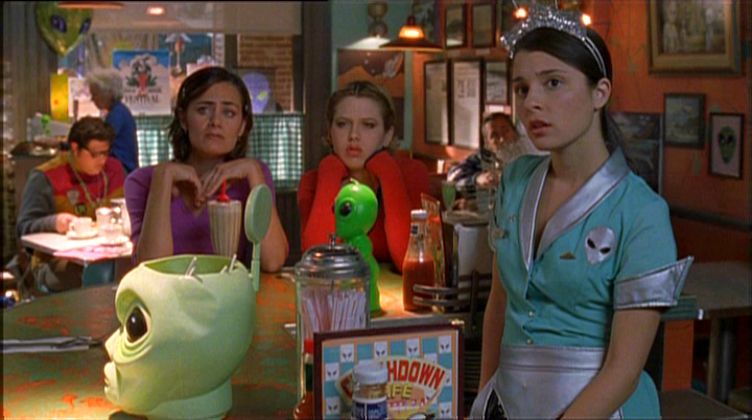
Michael at the Crashdown — caught between two worlds

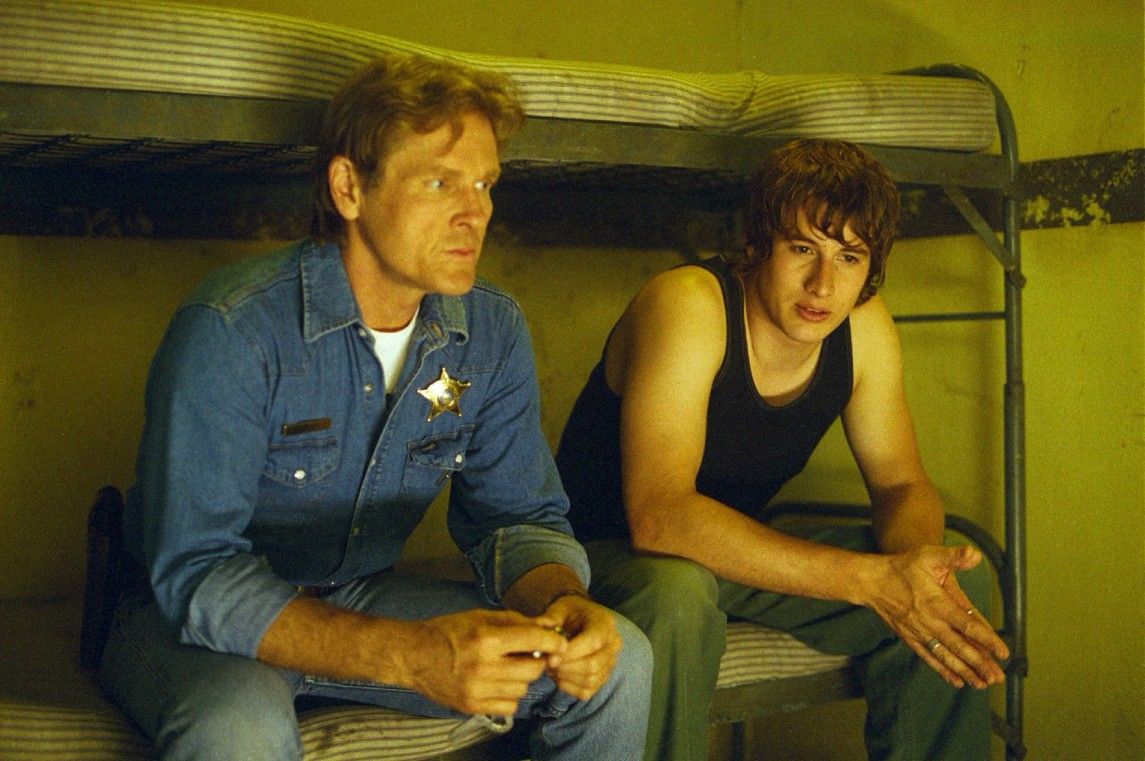
The walls he built — and never quite took down
The Outsider Among Outsiders
Here’s the central irony of Michael Guerin: in a show about aliens hiding among humans, he is the most alienated character of all — and not just because of his biology.
Max and Isabel Evans were adopted into a warm, stable family. They have a home, parents who love them, and the social scaffolding that comes with belonging somewhere. Michael has none of that. He aged out of foster care, bounced between neglectful and abusive households, and by the time we meet him, he’s essentially living alone in a run-down apartment, emancipated and entirely self-reliant.
That backstory isn’t just sad — it’s defining. Michael’s defensiveness, his volatility, his reflexive distrust of anyone who gets too close — all of it is rooted in a life that taught him, over and over again, that people leave or disappoint. His alien identity becomes almost a metaphor for something more earthly and familiar: the experience of growing up without being truly wanted.
Where Max and Isabel have learned to blend in and build a life, Michael has learned to survive. Those are very different skill sets.
His alien identity becomes a metaphor for something more earthly: the experience of growing up without being truly wanted.
The Armor He Can’t Take Off
One of the most compelling things about Michael’s characterization is how deliberately the writers made his emotional armor visible. He’s aggressive where Max is measured. He’s impulsive where Isabel is calculating. He pushes people away — loudly, rudely, sometimes cruelly — precisely because he knows what it feels like to have nothing to lose.
His relationship with Maria DeLuca is the most revealing lens for this. Maria is sunshine and chaos and heart-on-sleeve vulnerability — in almost every way, Michael’s opposite. And yet their chemistry is undeniable, and the show uses their relationship to crack Michael open in ways that nothing else can.
Every time Michael gets close to letting Maria in — really in — he retreats. He says the wrong thing. He picks a fight. He reminds her (and himself) that he’s not built for this. And yet he keeps coming back. He can’t stop coming back. The push-pull isn’t written as teenage dramatics; it’s the behavior of someone who has learned that love is a liability and hasn’t yet figured out how to unlearn that lesson.
That’s not a simple character. That’s a study in self-sabotage born from genuine psychological damage.
Loyalty vs. Freedom
Another dimension that sets Michael apart is his complicated relationship with duty and belonging. Max, as their presumed leader, is focused on keeping the group safe. Michael chafes against this constantly — not because he doesn’t care about Max or Isabel, but because he has a different, more urgent need: to know. To go home. To find out who he actually is and where he comes from.
This creates one of the show’s most interesting tensions. Michael is simultaneously the most loyal member of the group and the one most likely to blow the whole operation in pursuit of answers. He will protect Max and Isabel with his life — and in the same breath, make a reckless unilateral decision that endangers all three because the pull toward his true origins is too strong to resist.
Is that selfishness? Trauma? An existential need for identity that runs deeper than any human experience? The show never fully resolves it, and that ambiguity is the point. Michael doesn’t know who he is. And until he does, he can’t fully commit to any version of himself.
More Human Than He Admits
For all his tough exterior and alien-first attitude, Michael is, ironically, the character who displays the most recognizably human emotional responses throughout the series. He’s the one who gets visibly angry when things are unfair. He’s the one who grieves loudly rather than stoically. He’s the one whose love, when it finally surfaces, looks like the messy, imperfect, inconvenient love that real people experience — not the grand romantic gestures of Max and Liz’s storybook dynamic.
There’s a reason Brendan Fehr’s performance resonated so strongly with viewers. Michael felt real in a way that the show’s more idealized characters sometimes didn’t. His flaws weren’t charming quirks — they were wounds. And watching him slowly, reluctantly begin to trust people, to let Maria matter, to admit that Earth might be home after all — that arc is quietly one of television’s better coming-of-age stories.
Max Evans may be the king. But Michael Guerin is the soul of Roswell.
The Neglected Hero
Part of what makes Michael so fascinating is how undersung he is in the broader cultural memory of Roswell. The Max-and-Liz romance dominates the conversation, as it was designed to. But Michael’s journey — from isolated, angry survivor to someone who chooses connection even knowing the cost — is arguably the show’s most complete character arc.
He starts the series with walls so high you can barely see the person behind them. By the end, he has chosen Maria. He has chosen his friends. He has chosen Earth — not because it’s safe or easy, but because it’s his. And that choice, made by someone who grew up having nothing, means everything.
Max Evans may be the king. But Michael Guerin is the soul of Roswell.
Are you a Michael Guerin defender? This spiky, complicated, deeply underappreciated character deserves his flowers — and then some.
Roswell · 1999